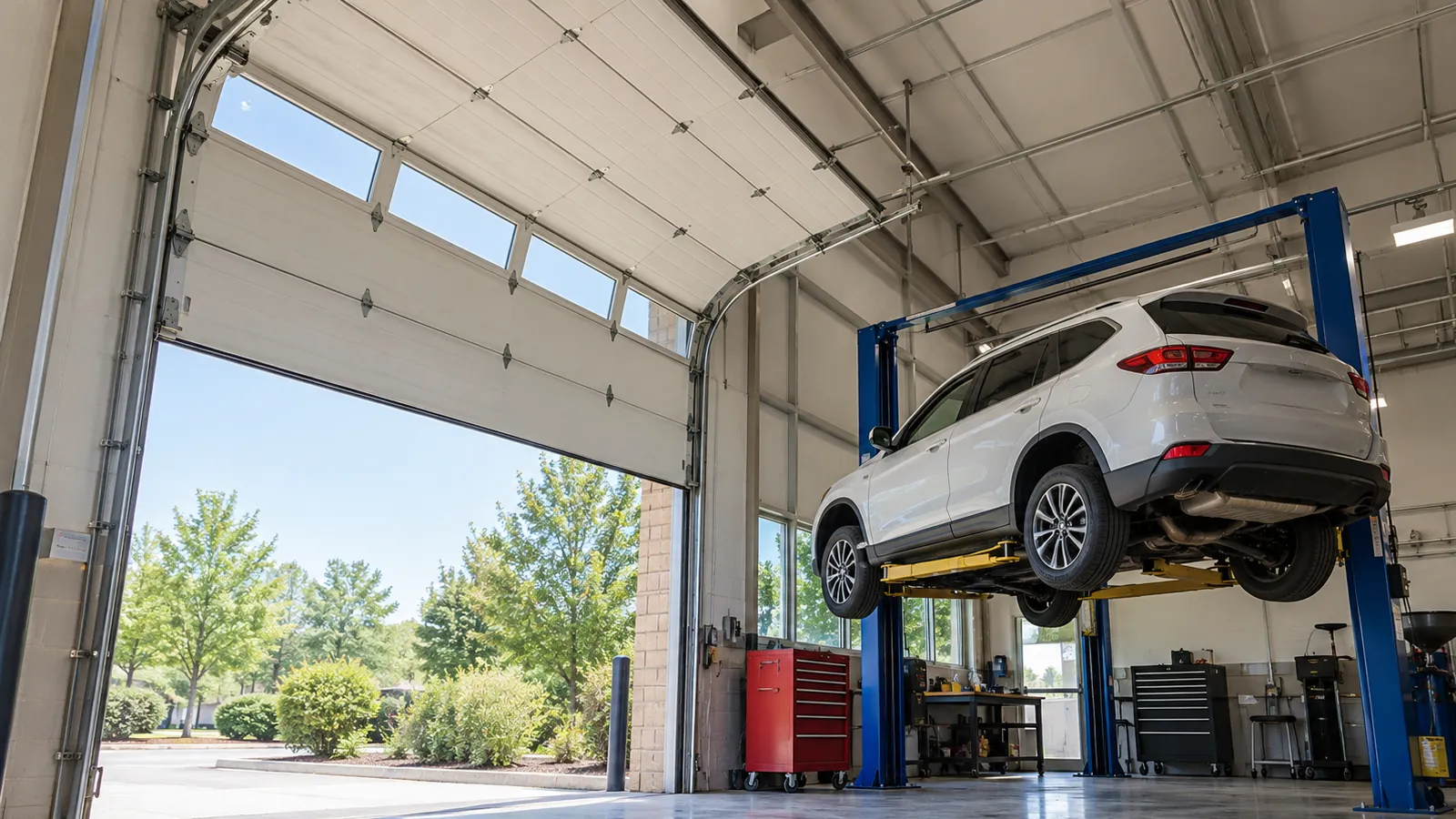
How They Differ From a Home Door
A commercial sectional door works like a home garage door, with hinged panels rolling in tracks. Everything is built heavier: thicker steel, stronger hinges and rollers, wider and taller openings, and springs rated for far more cycles.
Panels are often thicker too, with a foam core that stiffens the door against dents and wind. Many are insulated, which helps in heated shops, cooled warehouses and food businesses.
Lift Types
Standard lift tracks curve back just above the opening, like a home door.
High lift tracks run up the wall before turning back. That clears overhead cranes, lights and lifts in auto bays.
Vertical lift tracks run straight up the wall, so the door never crosses the ceiling. It suits tall buildings with clear wall space above.
Changing lift type on an existing door usually means new track and springs, so it's worth getting right the first time.
The right lift depends on the headroom, what's mounted on the ceiling and how tall the vehicles are.
Door Styles
- Ribbed or flush steel for warehouses and docks
- Insulated steel for climate controlled spaces
- Full view aluminum and glass for showrooms, service drives, restaurants and breweries
- Doors with a window row to let daylight into a work bay
Glass doors are popular with businesses that want to open a dining room or taproom to the street. The glass garage doors page covers glass choices and heat.
Common Repairs
- Bent track or broken rollers after a vehicle hit
- Broken torsion springs, often after years of heavy cycling
- Frayed or broken cables, which leave the door hanging crooked
- Cracked or dented panels, which can often be replaced section by section
- Worn bottom seals that let water and pests in
All of these involve spring tension, so they're jobs for a technician. Read commercial garage door repair for what to do while you wait.
Springs and Cycle Life
A home door may open a few times a day. A busy bay door may open and close dozens of times. Standard springs wear out fast at that pace.
High cycle springs cost more up front but last much longer on a busy door. Ask how many cycles the springs are rated for.
Wind and Code
Large doors catch a lot of wind, and North Carolina's building code sets wind load requirements for them. New doors carry a rating label. Bigger commercial jobs may also need a permit, so ask the installer who handles it.
Need a motor for the door? See commercial door operators. To get a quote, request a call back or call (919) 555-0136.